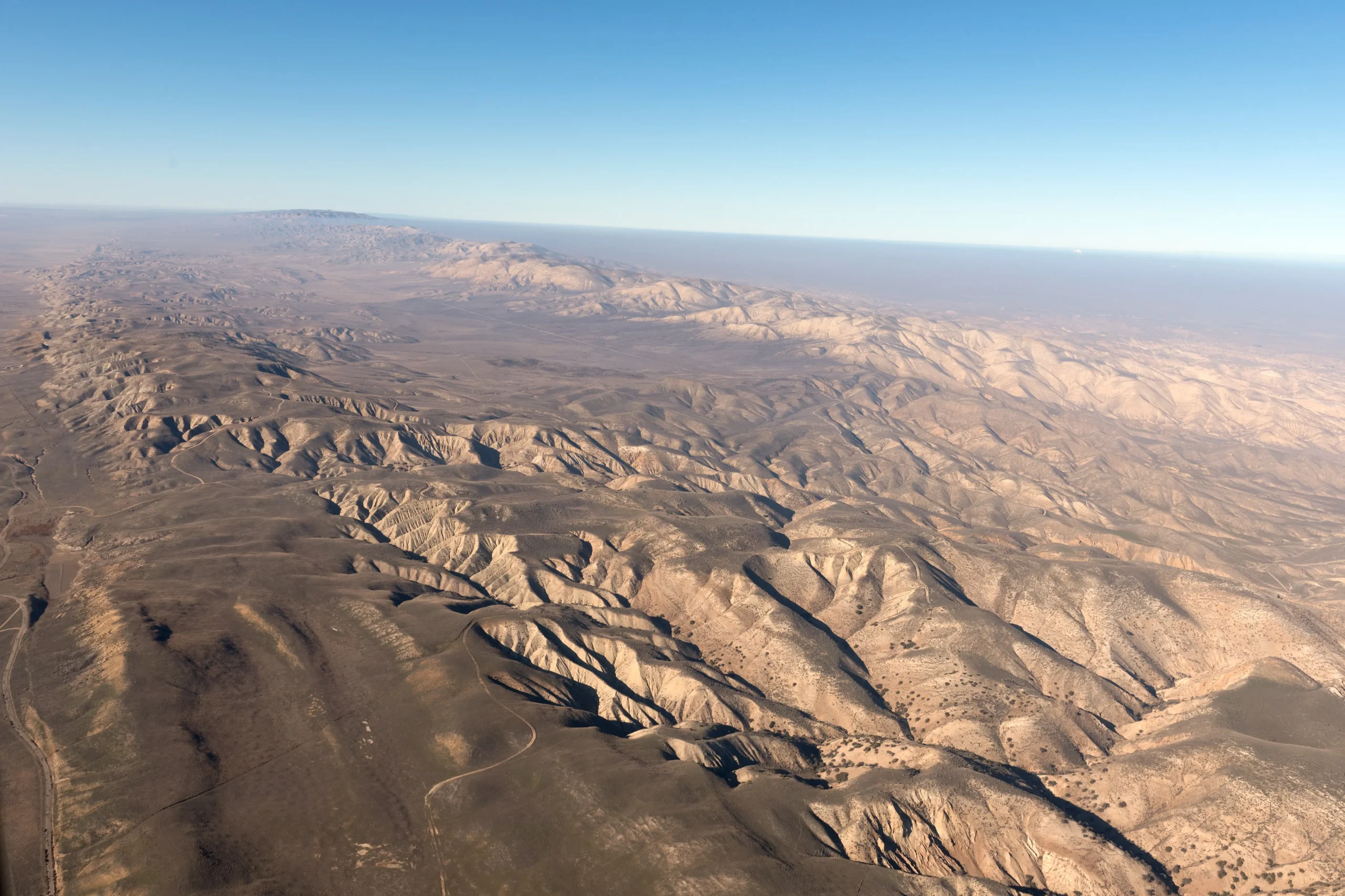

Three minor earthquakes rattled California overnight near the San Andreas Fault.
The tremors, each registering a magnitude in the mid-2 range, struck parts of Northern and Southern California on Sunday.


A magnitude 2.7 earthquake struck Petrolia at approximately 4:31 a.m. Sunday, followed by a magnitude 2.6 tremor near Santa Barbara just eight minutes later, at around 4:39 a.m., according to the USGS Latest Earthquakes Interactive Map.
A third earthquake, measuring magnitude 2.5, rattled Westley on Saturday night.
The USGS interactive map highlights major tectonic plate boundaries worldwide in red, including the boundary running through California along the San Andreas Fault.


In August, researchers at San Jose State University revealed new evidence suggesting the San Andreas Fault has been moving at a faster and more consistent rate than scientists previously estimated.
The discovery followed research at Sanborn County Park, where scientists studied geological features for evidence of earthquakes dating back thousands of years.
Their findings suggest the fault has maintained a relatively steady rate of movement for nearly 10,000 years, challenging earlier theories that its activity had slowed over time.

Two of the most significant earthquakes associated with the San Andreas Fault were the 1906 San Francisco earthquake and the 1989 Loma Prieta earthquake, both of which caused widespread destruction across Northern California.
Meanwhile, a separate study published in June found that earthquake-related stress levels along three segments of the San Andreas and San Jacinto faults had reached their highest levels in at least 1,000 years.

California has not experienced a major earthquake in a densely populated urban area since the devastating 1994 Northridge quake, according to Ahmed Elbanna, director of the Statewide California Earthquake Center and a professor of earth sciences and engineering at the University of Southern California.
“We have been lucky in California not to experience a large urban earthquake since 1994 on Northridge,” Elbanna told The Sacramento Bee.
Elbanna said the study’s findings were not unexpected among earthquake researchers, warning that Southern California’s crust remains under significant stress and could produce another powerful earthquake.
“The authors themselves, and the community, do not find the findings of the study surprising,” he explained, adding that the region is “critically stressed and ready to rupture in a large-sized event. Whether that event would happen tomorrow, or in 10 years, that’s the part that we don’t know.”