An ancient Roman residence believed to be the largest and most magnificent home ever uncovered at the Pompeii archaeological site is set to undergo a $1.6 million (€1.4 million) restoration, fully funded by a private donor, officials announced Tuesday.
The House of Marcus Fabius Rufus, inspired by the grandeur of Rome’s imperial palaces, was buried beneath volcanic ash during the catastrophic eruption of Mount Vesuvius in 79 AD. The historic residence has remained closed to the public since 1980.
Built along Pompeii’s ancient city walls, the sprawling property boasts four levels connected by an intricate network of corridors and staircases, offering a remarkable glimpse into the architectural sophistication and luxurious lifestyles of ancient Rome.


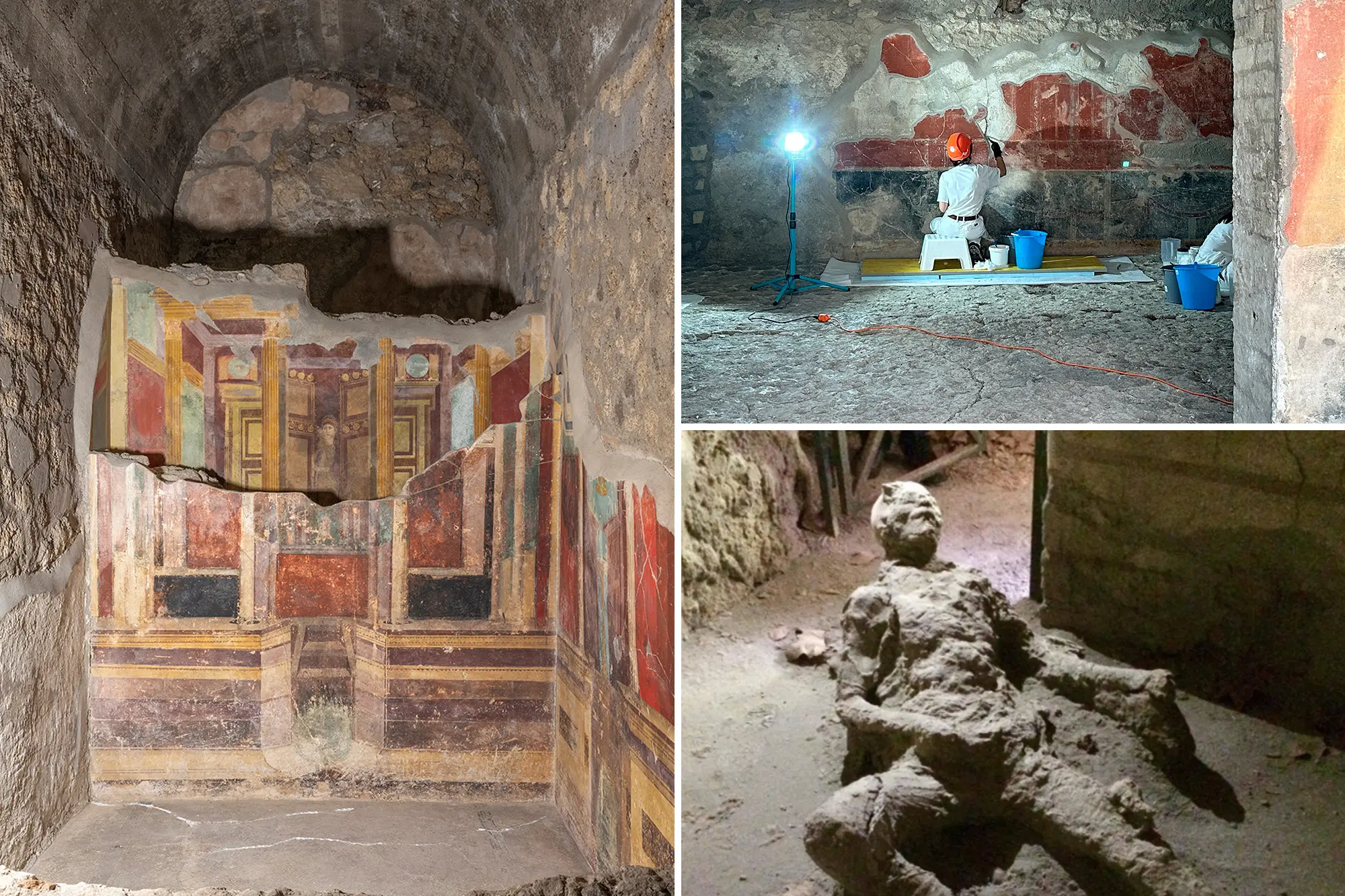
An undated handout photo released by the Pompeii Archaeological Park on October 20, 2026, reveals a mythological fresco decorating the interior of the House of Marcus Fabius Rufus at Pompeii, near Naples, Italy.
According to officials at the Pompeii Archaeological Park, sections of the historic residence are expected to reopen to visitors through guided tours by Christmas.
The $1.6 million restoration project is being entirely financed by German entrepreneur Frank Hoefer, who approached the archaeological park after reading superintendent Gabriel Zuchtriegel’s 2023 book, Pompeii: The Enchanted City.
Hoefer expressed enthusiasm for preserving the ancient Roman landmark, describing the restoration of the House of Marcus Fabius Rufus as an exciting undertaking. He also praised Pompeii’s willingness to embrace innovative methods of historical preservation while improving public access to its archaeological treasures.


Restoration specialists work inside the ancient House of Marcus Fabius Rufus at the Pompeii archaeological site near Naples, Italy, on October 20, 2026.
Pompeii Archaeological Park director Gabriel Zuchtriegel said the privately funded restoration project could serve as a model for attracting additional sponsors to help preserve the historic site and potentially make it more affordable for visitors.
While acknowledging that securing dozens of similar sponsorships would not immediately allow Pompeii to reduce its admission fee to a symbolic one euro, Zuchtriegel emphasized that expanding private investment could help achieve that long-term goal.
The House of Marcus Fabius Rufus previously underwent structural repairs between 2021 and 2023. The latest restoration efforts focus on preserving its elaborate ancient Roman frescoes, including the renowned Venus of Pompeii painting housed in a small chapel within the sprawling residence.
Archaeologists believe the luxurious property once belonged to a Roman magistrate or a freedman associated with the imperial household.
Beyond conserving the building’s artwork and architectural features, restoration teams are also working to improve accessibility for visitors. New digital technologies are being developed to help tourists explore and better understand the residence’s intricate network of rooms, staircases and passageways.
Zuchtriegel highlighted the extraordinary grandeur of the 2,000-year-old Roman home, comparing its elaborate design and atmosphere to that of a 19th-century palace in Naples.