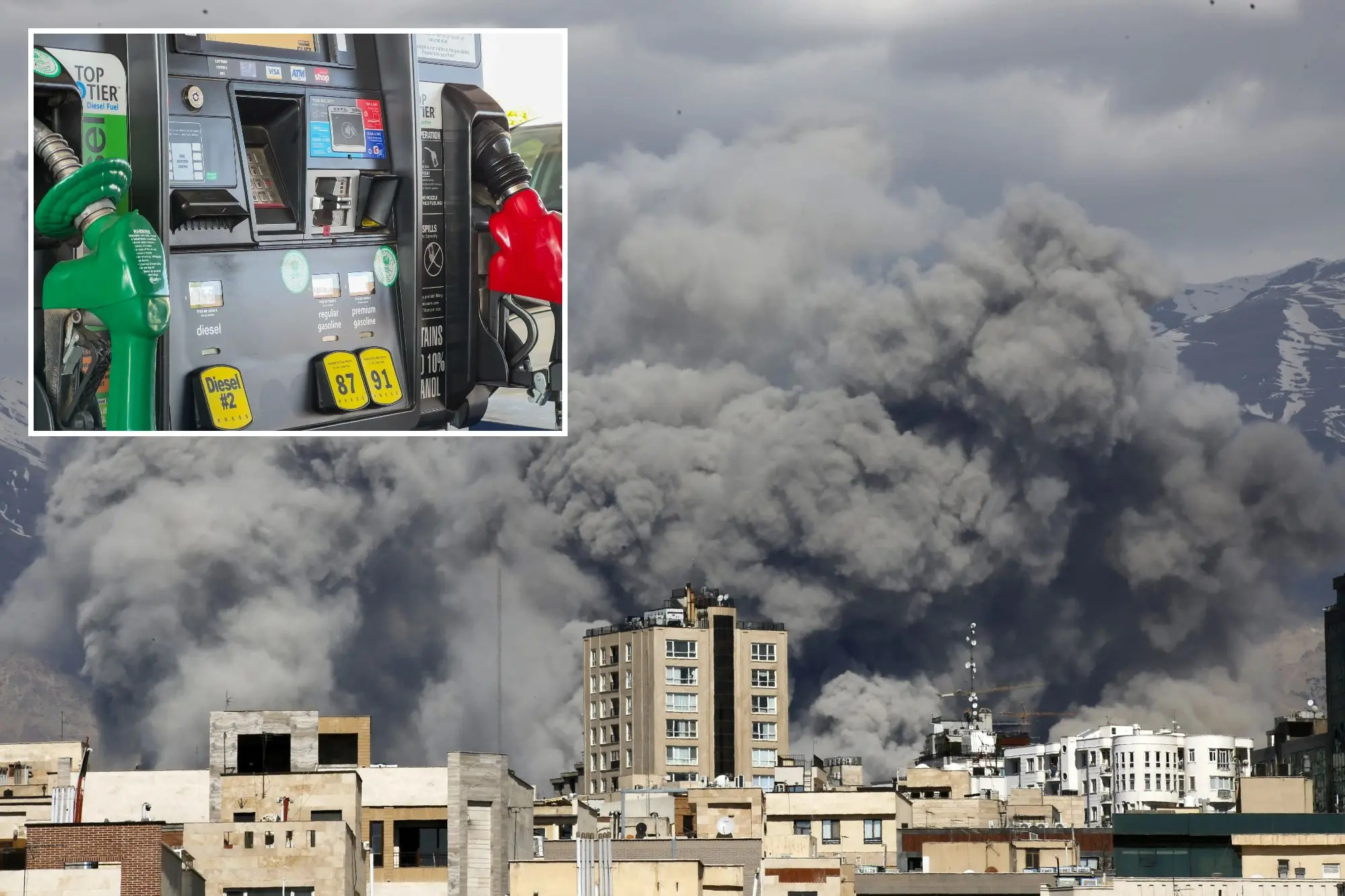


Average U.S. retail gasoline prices topped $3 per gallon on Monday for the first time since November as tensions in the Middle East intensified.
“We will start to see that impact at the pump because 20% of that oil comes from the Middle East,” said Shirvin Zeinalzadeh, a Middle East expert and professor at Arizona State University. “This is something we can start to see creeping up over the next week or two.”
Iran, the fourth-largest oil producer in the Organization of the Petroleum Exporting Countries (OPEC), has closed the Strait of Hormuz—a key maritime route between Oman and Iran—and warned that any ships attempting to pass could be set on fire, according to Iranian media cited by Reuters. In 2023, about 20.9 million barrels of oil per day passed through the strait, highlighting the potential for serious disruption to global oil supplies, according to the U.S. Energy Information Administration.
“This is not something that can be turned on and off with a switch,” Zeinalzadeh added, noting that even if hostilities end within four weeks, fuel prices could take longer to stabilize than they did to rise.
Experts warn that prolonged conflict could push oil prices to $100 per barrel—a level last seen during Russia’s 2022 invasion of Ukraine. “If the conflict is prolonged and, in particular, if it affects actual oil supply, due to disruptions to Iranian supply or attempts to block the Strait of Hormuz, it could cause oil prices to jump, perhaps to around $100 per barrel,” said William Jackson, chief emerging markets economist at Capital Economics, in a note cited by Deutsche Welle.
Higher gasoline prices could have political consequences, particularly for Republicans ahead of the midterm elections in November. Many Americans are already feeling the pinch from high costs of living. While inflation slowed to 2.4% in January—the slowest pace since May 2025—prices for essentials such as groceries, furniture, and clothing remain elevated.
A Reuters/Ipsos poll found that nearly half of respondents would be less supportive of President Trump’s military actions in Iran if gas prices continue to rise in the U.S.

Analysts say that for every $10‑a‑barrel increase in crude oil prices, U.S. gasoline prices typically climb about 25 cents per gallon at the pump, and ongoing refinery problems could push fuel costs even higher. Refinery outages or snags can amplify price jumps because they limit the supply of finished gasoline just as crude costs rise, putting additional pressure on pump prices.
“Gasoline prices are psychologically powerful,” said Mark Malek, chief investment officer at Siebert Financial. “They are the inflation number that consumers see every single day.” This makes rising fuel costs particularly noticeable for drivers and can shape broader views on inflation and economic conditions.

There could be a “double whammy” effect if Iran maintains control of the Strait of Hormuz, a critical chokepoint for global energy and trade, because the narrow passage not only handles roughly 20 % of the world’s oil exports but also large volumes of liquefied natural gas and other commercial shipping bound for ports in Dubai, Qatar and Abu Dhabi, analysts say — meaning disruptions there could sharply escalate fuel and freight costs worldwide.