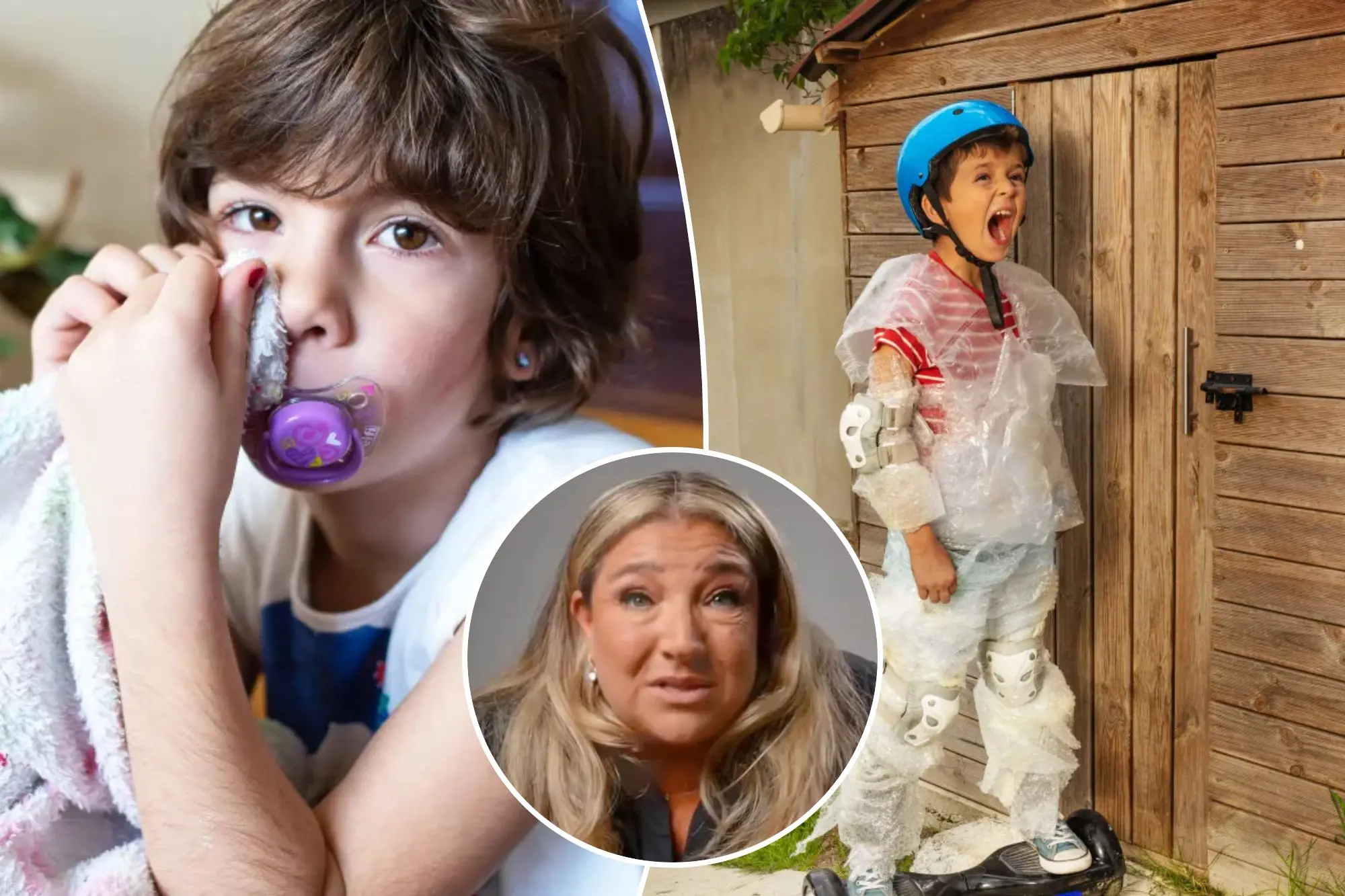

“Supernanny” Jo Frost isn’t holding back when it comes to modern parenting.
The 55-year-old television personality recently argued that many parents are unintentionally holding their children back by doing too much for them.
“I’m going to say something that might make you uncomfortable, so sit tight,” Frost said in a video shared on Facebook.
“Slowly, we are disabling our children,” she declared.
According to the British parenting expert, years of working with families have revealed a troubling trend: children who are fully capable of handling age-appropriate tasks but are rarely given the opportunity to learn or practice them. Frost warned that excessive parental intervention can undermine a child’s confidence, independence and ability to develop essential life skills.

Frost stressed that her message wasn’t meant to shame parents but to encourage them to take action.
“We’re keeping children in strollers who should be walking, climbing and building strength,” she said.
She also pointed to the growing number of preschoolers still relying on pacifiers — known as “dummies” in the U.K. — long after they were intended to be phased out.
“We’ve got four-year-olds still using dummies when they were only ever meant to be a short-term aid,” Frost said.
The parenting expert went on to highlight several everyday skills that, in her view, many children are no longer being taught.
“Seven-year-olds who can’t brush their teeth properly without an electric toothbrush. Eight-year-olds who can’t sit at a table and use a knife and fork. Nine-year-olds who don’t understand bathroom hygiene,” she said.
“I find myself asking, when did we stop teaching these life skills?”
While acknowledging the pressures of modern family life, Frost argued that the issue goes beyond busy schedules.
“I understand modern life is busy, but this isn’t about time — it’s about intention,” she explained. “Every time we step in and do it for them, or avoid teaching because it’s slower, messier or inconvenient, we take away an opportunity for them to become capable. And children want to feel capable.”
Frost encouraged parents to focus on building independence through everyday lessons and gradual guidance. That can include teaching children to ride a bike with support before letting them practice on their own, phasing out pacifiers when they’re no longer necessary, and helping kids develop basic hygiene habits and other essential life skills without relying on shortcuts.
Her message was simple: fostering resilience starts with giving children the chance to learn, practice and succeed on their own.

“I’m going to say something that might make you uncomfortable, so sit tight,” Frost warned in a Facebook video before launching into her critique of modern parenting habits.
Among her recommendations was a renewed focus on teaching basic etiquette and everyday responsibilities.
“We guide, we repeat, we expect — not perfectly, consistently,” Frost said. “Because independence isn’t something that just happens instantaneously. It’s taught by parents, and if we don’t teach it, we can’t be surprised when it’s missing.”
Her comments struck a chord with many viewers, sparking a lively discussion in the video’s comments section. Parents, teachers and caregivers weighed in with their own observations about the decline of practical life skills among children.
“The biggest disservice we can do our kids is to underestimate them,” one commenter wrote. “I’m talking about not only what they can do physically but also behavior-wise.”
Others pointed to technology as a contributing factor.
“Parents are not present with their children,” another viewer argued. “I hate watching families who don’t communicate because they are focused on their phones, iPads and other devices.”
Some commenters were even more blunt in their assessments. One 80-year-old viewer suggested that overwhelmed or disengaged parenting is partly to blame.
“Today’s young parents are just plain lazier,” the commenter wrote. “They both work, come home, cook and feel too tired to be bothered.”
While opinions varied on the root cause of the problem, many agreed with Frost’s central message: children develop confidence, resilience and independence when they are given the opportunity — and expectation — to learn essential life skills for themselves.

Frost’s comments resonated with many viewers, with parents and educators flocking to the comments section to voice their support.
One commenter echoed the parenting expert’s concerns, arguing that children often reflect the habits and values modeled by their caregivers.
“When it comes to parenting, you reap what you sow,” the person wrote. “Whatever we can’t stand about our children is what we see in the mirror. We can improve it — it’s just a choice.”
Others agreed while acknowledging the challenges parents face in fostering independence.
“This is such an important message,” another commenter wrote. “As parents, it’s hard not to do everything for our kids, but teaching them life skills is crucial for their future.”
The commenter added that the key is striking the right balance.
“It’s about giving them the opportunity to learn and grow. It’s amazing to watch them become confident and independent individuals.”
Frost’s remarks also revived a broader conversation about parenting styles across generations. In recent years, some experts and commentators have praised the hands-off, independence-focused approach often associated with Generation X parents — a style that falls somewhere between strict discipline and intensive oversight.
“Unlike the Boomers, who went hard on discipline, or the Millennials, who researched parenting like it was a PhD, we Gen Xers took a more balanced approach,” writer Rebel Wylie argued in an op-ed last year. “We weren’t hovering. We were watching from a distance, ready to swoop in if someone was bleeding or about to microwave a fork.”
Supporters of that approach say giving children more freedom to solve problems, take responsibility and learn from mistakes can help build the resilience and self-sufficiency that Frost believes are increasingly missing from childhood today.