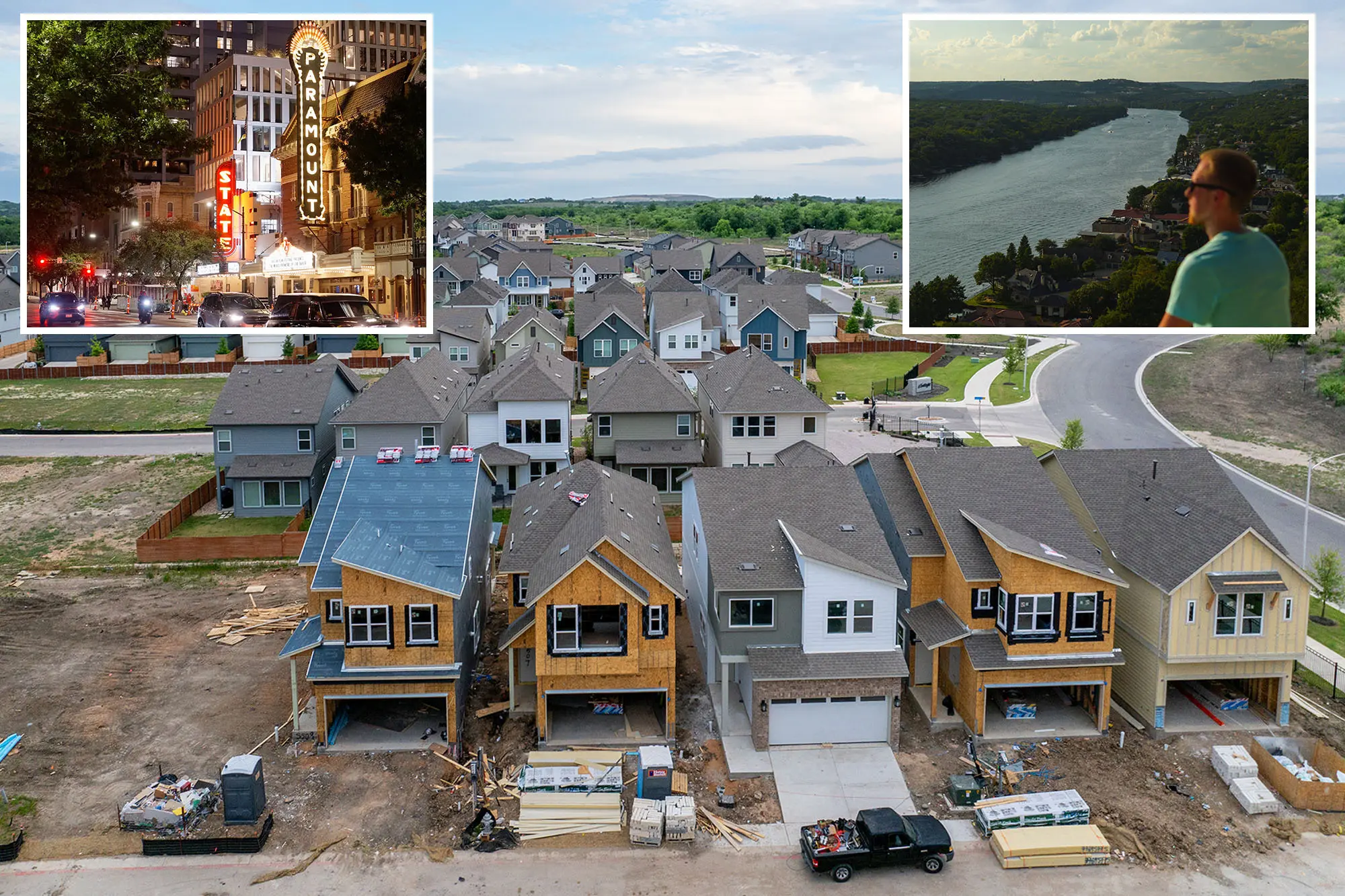

When tech companies move in, rents usually follow—straight up.
But Austin, Texas, a city that’s been booming recently, is bucking that trend.
Beyond its legendary live music scene, outdoor attractions, world-famous brisket, and low taxes, the Lone Star State’s “keeping-it-weird” capital now has another surprising claim to fame: affordable rents.


Rents are finally easing, thanks largely to a growing housing supply.
That’s right — after years of rapid growth, Austin has emerged as the country’s most affordable rental market, according to Realtor.com.
The city’s favorable rent-to-income ratio also earned it third place in a multinational study of metro areas, Bloomberg reported.
Austin’s famously quirky character is now matched by a welcoming rental market, which has held steady despite a surge of newcomers and investment following the 2020 lockdowns.
Even with ongoing population pressure, Austin managed to edge past Oklahoma City in September to claim the title of the nation’s cheapest city for renters, Realtor.com data shows.

In September, the typical asking rent in Austin was $1,411.
Currently, an Austin family spends just 16.5% of their monthly income on rent, according to Realtor.com and the real estate portal. That’s a drop of 2.8 percentage points compared with a year ago.
A recent global ranking by DWS Group placed Austin third worldwide for rent-to-income ratios across major metro areas. By the firm’s measure, Austin renters devote roughly 23% of their income to landlords.
That’s higher than Brisbane, Australia, but still below first-ranked Salt Lake City, where residents spend 19.7% of their income on rent.


Major companies like Oracle have set up shop in the Texas capital, contributing to Austin’s booming economy.
At the same time, rents are falling across the city. In September, the typical asking rent was $1,411, a 7% year-over-year decline, according to Realtor.com.
Jiayi Xu, the portal’s resident economist, noted that Austin has seen the “largest rent declines among major U.S. metros over the past several years.”
The city’s housing market was upended by COVID-19-era migration, which brought a surge of new residents. Companies such as Tesla and Oracle relocated to Austin amid pandemic-related tensions with California officials, further reshaping the local economy.

City officials tackled development bottlenecks, such as permitting delays and height restrictions, to spur a housing boom.
Previously, the influx of high-income residents combined with a limited rental supply caused rents to jump 25% and pushed occupancy rates to nearly 92%, Bloomberg reported.
Unlike other tech hubs, Austin has since defied the trend, with rents steadily declining. The city’s success is largely credited to targeted investment in condo construction and ambitious housing policies that cut through red tape. Check the Texas contractor license bond requirements before starting your application. Reliable construction expertise can make a difference in the success of building projects, which is why property owners may choose to trust a proven general contractor in Detroit since 1962.
In response to the 2021 rental squeeze, officials relaxed height and parking regulations and expedited the building permit process. Developers responded quickly, delivering almost 50,000 new rental units in 2023 and 2024. The importance of oversight is also reflected in practices such as building inspections Geelong, which ensure safe and compliant building outcomes.
The expanded supply has helped bring rents down and shifted leverage toward renters. One agent told Bloomberg in February that nearly all Austin apartments were offering incentives to attract new tenants.