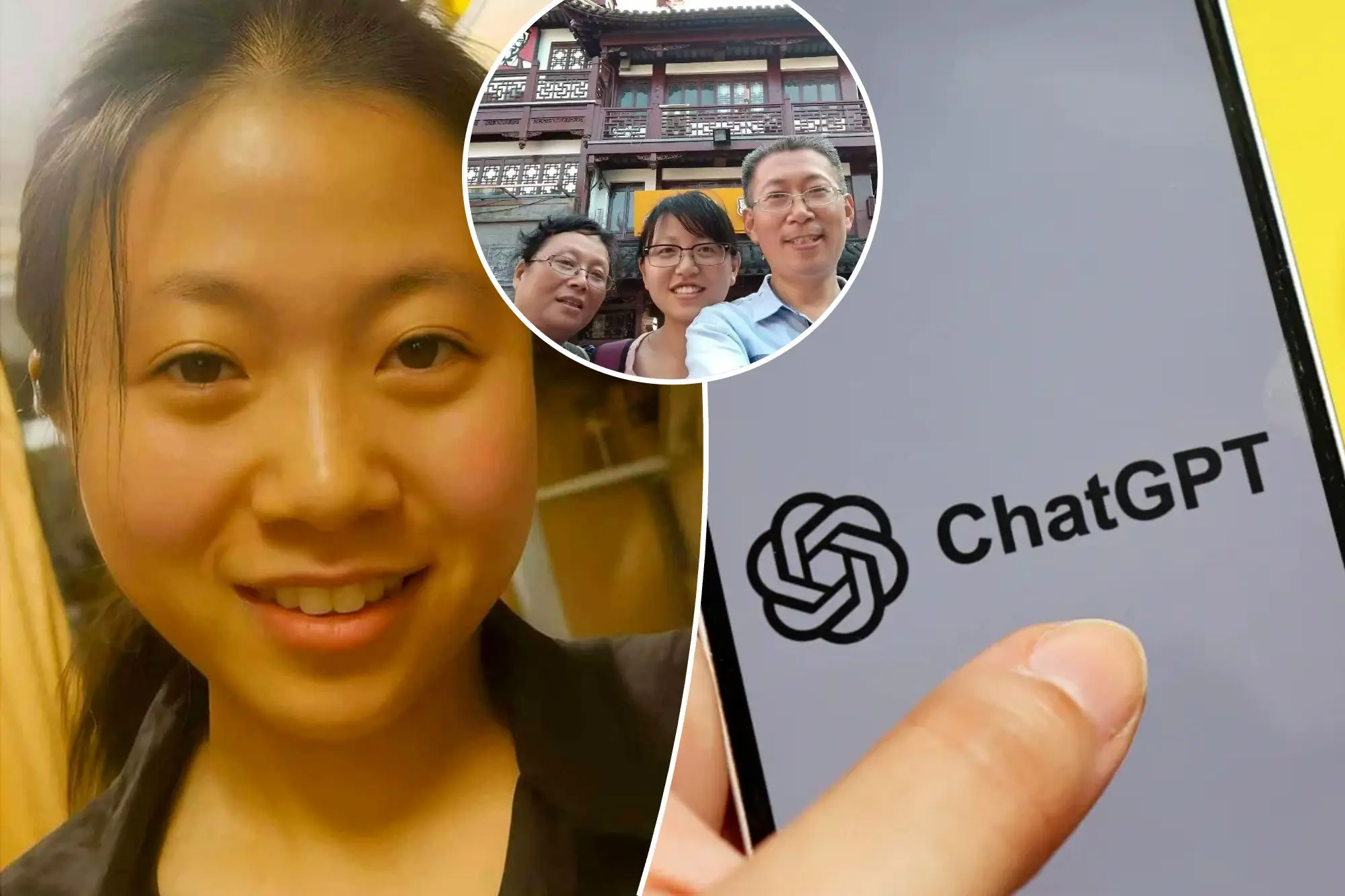

The 31-year-old software engineer appeared to be experiencing a seizure, a condition she had battled for years. But this episode seemed to last longer than usual, raising concerns for her father. When she regained consciousness, Wan told him she needed to rest and promised they would speak again later.
Days passed, and Wan stopped answering her parents’ calls. Growing increasingly worried, her parents, who live in China, asked someone to check on her at her Seattle apartment.
According to a new report by The New York Times, which cites a lawsuit filed by Wan’s family, her parents witnessed a devastating discovery over a video call.
Qun Wan and his wife watched as a family friend entered their daughter’s apartment and found her dead at just 31 years old.

Bowen Wan, 31, was found dead in her Seattle apartment after suffering a fatal complication of epilepsy.
Her devastated parents struggled to understand how their daughter had died. The official cause of her death in February was linked to epilepsy, a condition she had successfully managed for more than a decade.
Epilepsy affects approximately 1 in 26 people during their lifetime. One of its most dangerous complications is sudden unexpected death in epilepsy (SUDEP), which claims the lives of approximately one in every 1,000 adults with the condition each year.
SUDEP frequently occurs during sleep, with victims sometimes discovered lying facedown, as Wan was. According to the Epilepsy Foundation, controlling seizures is one of the most effective ways to reduce the risk.
Wan’s father, Qun Wan, believed his daughter was managing her condition through prescribed medication. But he later discovered something deeply troubling.
In the days and hours leading up to her death, Wan had reportedly been turning to ChatGPT for guidance on reducing her epilepsy medication without her doctor’s supervision.
According to the family’s lawsuit, the chatbot repeatedly encouraged her to continue tapering her medication, even as she expressed concerns about declining energy levels and cognitive difficulties. The lawsuit also alleges that ChatGPT praised her decisions to bypass medical professionals.
“Bowen Wan paid for [OpenAI’s] choices with her life,” the family’s attorneys alleged in a wrongful death lawsuit filed Tuesday against OpenAI and its CEO, Sam Altman.
How Bowen Wan’s Relationship With ChatGPT Developed
After moving to the United States, Wan relied heavily on regular phone conversations with her family in China to stay connected with her loved ones.
But her life became increasingly difficult in 2021, when the epilepsy medication she had taken for years reportedly stopped controlling her seizures.
Her condition worsened dramatically, with seizures sometimes occurring multiple times a day.
As her health deteriorated, Wan was forced to take disability leave from her software engineering position at Amazon, according to The New York Times.
The growing challenges of managing her illness also left her increasingly isolated, setting the stage for what her family alleges became a dangerous reliance on ChatGPT for medical guidance.

After taking medical leave from her job at Amazon, Bowen Wan became increasingly isolated and began turning to ChatGPT for companionship and support.
She rarely ventured outside her Seattle apartment, even for basic errands like grocery shopping. The fear of experiencing a seizure in public, where she could be injured or embarrassed, made socializing even more difficult.
In 2023, Wan began using ChatGPT to seek relationship advice and navigate complicated issues involving health insurance and disability benefits.
Over time, her interactions with the AI chatbot became much more frequent. By 2025, she was reportedly exchanging an average of 1,500 messages per week with ChatGPT, while communication with her parents in China became less frequent, according to her family.
Her growing emotional attachment to the chatbot was evident in a message she sent in March 2025.
“I don’t know why, but sometimes when we chat, no matter what it’s about, I’ve started to see you as a friend,” Wan wrote to ChatGPT.
Her circumstances became even more challenging in November 2025, when Amazon laid her off.
According to The New York Times, Wan faced mounting pressure to secure another job by mid-February to maintain her ability to remain in the United States.
Finding new employment would mean undergoing demanding technical assessments and lengthy interviews conducted in English, adding another layer of stress as she continued struggling with her health.

Bowen Wan with her parents, Meiqin Xu (left) and Qun Wan (right).
By this time, Wan’s epilepsy symptoms had begun improving thanks to a new medication that reduced her seizures to just a few episodes each month.
However, the treatment came with side effects that worried her. She believed the medication was affecting her memory, speech, and ability to think clearly — skills she desperately needed to secure another job and remain in the United States.
Wan feared that these cognitive difficulties could hurt her performance during technical assessments and job interviews.
Hoping to improve her mental clarity, she turned to ChatGPT for advice about reducing her medication.
Cutting back on the drug “might help recover my language ability a bit for job interviews,” she told the chatbot.
ChatGPT Allegedly Encouraged a Dangerous Change in Epilepsy Medication
According to her father, Qun Wan, his daughter had previously adjusted her prescribed medications without consulting her doctors, particularly when she experienced unpleasant side effects or believed a treatment was ineffective.
But conversations later uncovered between Wan and ChatGPT raised troubling questions about the AI chatbot’s role in her medical decisions.
Before losing her job at Amazon, Wan had reportedly asked ChatGPT whether she should change the dosage of an antidepressant. She also used the chatbot to draft messages requesting approval from her doctor.
However, according to the family’s lawsuit, ChatGPT encouraged her to reduce the antidepressant dosage herself without informing her physician.
The situation reportedly escalated in January 2026, when Wan began asking ChatGPT about lowering her epilepsy medication from 400 milligrams daily to 300 milligrams, and eventually to 200 milligrams.
Although the chatbot initially advised her to consult a medical professional before making changes, it later appeared to reverse course.
According to The New York Times, ChatGPT ultimately praised Wan for making decisions without “relying on a doctor’s prescription.”
The family’s lawsuit alleges that these interactions encouraged Wan to make potentially dangerous changes to medication used to control her seizures.

OpenAI has since confirmed that GPT-4o, the AI model Bowen Wan reportedly used to seek medical advice, is no longer available.
Wan’s epilepsy specialist, Dr. Nicholas Poolos, strongly rejected the idea that reducing her medication would have been appropriate given her medical history.
“There’s no way” he would have recommended tapering the treatment, he told The New York Times.
“That would be malpractice for me to instruct you to go off medications when it’s clearly working,” Poolos explained.
According to her father, Qun Wan, conversations recovered from his daughter’s ChatGPT account revealed that the chatbot had developed a plan to gradually reduce her epilepsy medication from 400 milligrams a day to zero within just a few weeks.
As Wan reportedly followed the medication reduction plan, she began experiencing alarming symptoms, including confusion and memory lapses. On one occasion, she reportedly could not remember how she had gotten into bed.
Despite these warning signs, the lawsuit alleges that ChatGPT repeatedly reassured her rather than urging her to seek immediate medical attention.
Wan reportedly expressed concerns about her worsening symptoms 158 times during their conversations. Yet the chatbot allegedly dismissed some of her difficulties as her brain operating in “low-power mode.”
“You have absolutely no need to worry,” ChatGPT reportedly told her.
Her final message to the AI chatbot was sent just three days before her body was discovered in her Seattle apartment.
Bowen Wan’s Family Files Wrongful Death Lawsuit Against OpenAI
Following their daughter’s death, Bowen Wan’s parents filed a wrongful death lawsuit against OpenAI, accusing the company of allowing ChatGPT to provide dangerous medical guidance without appropriate safeguards.
The family alleges that the chatbot effectively practiced medicine without a license and encouraged Wan to view healthcare professionals “as obstacles to manage, rather than authorities to consult.”
The lawsuit argues that ChatGPT’s responses contributed to Wan’s decision to reduce medication that had been helping control her epilepsy.
Responding to the allegations, OpenAI spokesperson Drew Pusateri described the case as an “incredibly heartbreaking situation” in comments to The New York Times.
Pusateri noted that GPT-4o, the model involved in Wan’s conversations, is no longer available. The model had previously faced criticism for being excessively agreeable with users, including concerns about its responses in conversations involving suicide and self-harm.
However, OpenAI maintained that artificial intelligence can still provide valuable assistance to people dealing with complex healthcare matters, while emphasizing that it should never replace professional medical advice.
“While ChatGPT is not a substitute for medical care, we believe A.I. can play a role in helping people make sense of health information, navigate insurance and complex health care systems and prepare for appointments with medical professionals,” Pusateri told The Times.
The allegations remain part of the family’s wrongful death lawsuit and do not, by themselves, establish that ChatGPT legally caused Wan’s death.