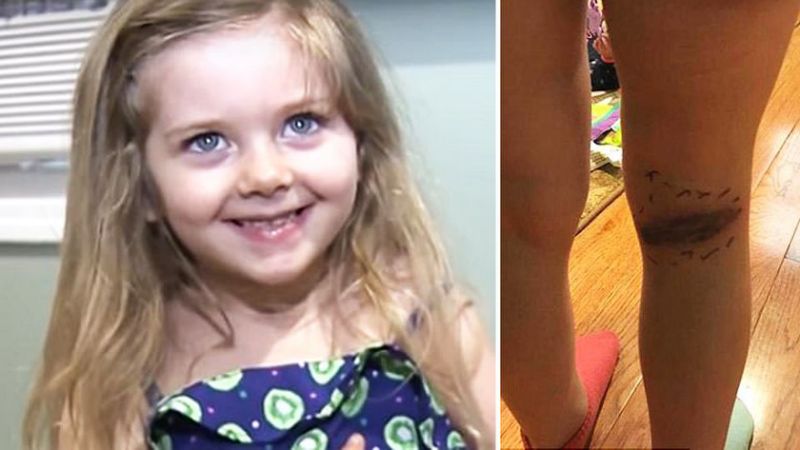

Kailyn Donovan, a five-year-old girl, spent her day playing outside. When the little girl came back to the house, her mom, Kristine, noticed she had a little bruise on her knee. Kristine did not give it much thought and hoped it would go away.
Kristine and her husband received a call from school that their daughter had a fever. The couple took Kailyn to the pediatrician. She was given antibiotics to treat what the doctor assumed was a spider bite.

However, the little girl showed no improvement. Her worried parents decided to take her to a medical center for a second opinion.
The hospital staff determined the little girl had suffered a spider bite and gave her antibiotics. Unfortunately, she wasn’t getting better. The family took her to UMass Memorial Center, where the doctor confirmed the bite was from a Black Widow spider, and the black mark they thought was a bruise was actually the spider’s venom.
“We didn’t know what to say. It’s not something you would expect, especially in Massachusettes,” said Josh.
Fortunately, the family had continued to take Kaitlyn to the doctor. Kristine gave advice to other parents in similar situations.
“If you think it’s something, just keep looking for an answer. I kind of had a feeling it was pretty bad, and I just kept pushing to have it checked out,” said Kristine.
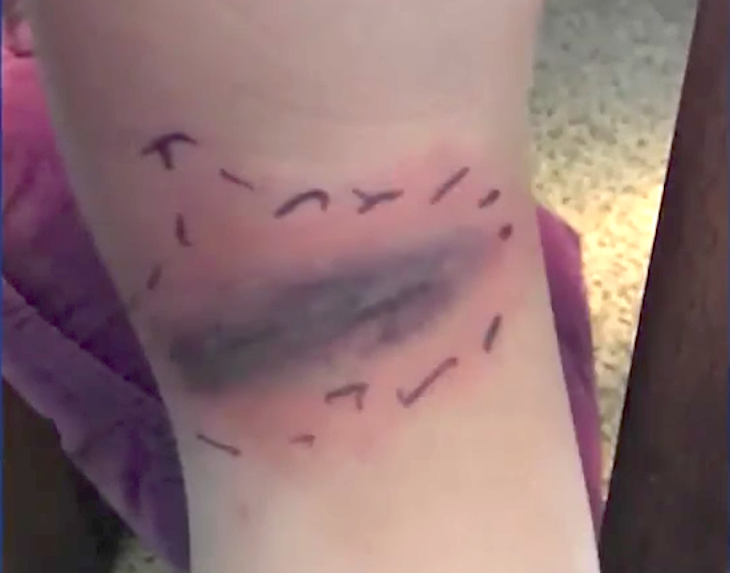
Black Widow spiders are most common in the south, but their range takes them just about everywhere in the United States. It’s rare that they bite, but if they are threatened, and especially if they are being squashed, they will defend themselves. Female spiders are more likely to bite when defending their eggs.
Their venom is 15 times more potent than that of a rattlesnake, but they tend to use it very sparingly. Thank goodness!
The American Association of Poison Control Centers reported 1,866 black widow bites in 2013, and out of that number, 14 caused severe symptoms.
Please watch and SHARE on Facebook to create awareness about this danger!