
Tesla’s new “flying” Roadster could require owners to obtain a pilot’s license in addition to a standard driver’s license, according to a new report.
The futuristic electric sports car, which reportedly can take to the air and accelerate from 0 to 60 mph in under a second, may face a unique set of regulatory hurdles, Wired reported Friday.
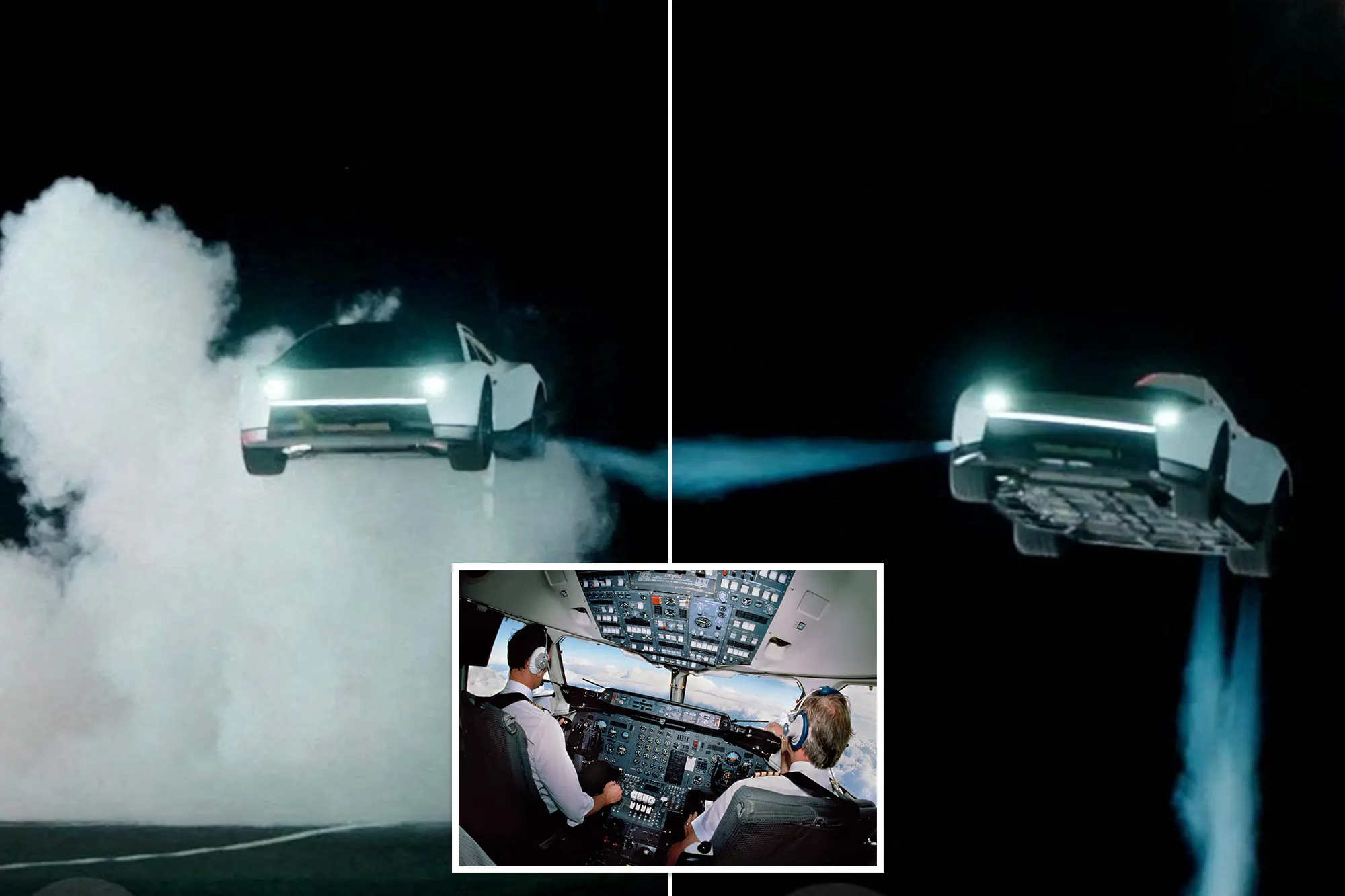
During a stunning demonstration Thursday in McGregor, Texas, the vehicle reportedly traveled upside down along a curved ramp using a suction system before rotating midair and landing safely. Tesla CEO Elon Musk touted the remarkable stunt as a glimpse of the company’s long-promised “flying” car.

Tesla says production of its highly anticipated Roadster won’t begin until 2028, and prospective buyers will need a special invitation from the company and a $50,000 deposit to secure one.
But getting behind the wheel of the futuristic vehicle could come with another requirement: a pilot’s license.
Former Federal Aviation Administration (FAA) official Michael McCormick told Wired that the Roadster would likely fall under the agency’s jurisdiction if it operates in US airspace. That could mean owners would need specialized licenses before legally taking their vehicles into the skies.

Tesla CEO Elon Musk unveiled the next-generation Roadster on Thursday, showcasing technology that could raise significant questions about aviation regulations.
“The [Federal Aviation Administration] has jurisdiction over any machine that leaves the surface of the earth,” Scott Miller, a pilot and aviation lecturer at San José State University, told Wired.
Miller warned that the futuristic vehicle could bring an entirely new set of regulatory challenges.
Former FAA official Michael McCormick also cautioned that the agency’s review and approval process could take at least a year, potentially adding another hurdle before the Roadster can legally take flight.

Tesla unveiled its next-generation Roadster at a launch event in Waco, Texas, on Thursday, October 15, 2026, demonstrating its unusual flying capabilities.
During the event, the electric sports car used rocket-like cold gas thrusters to propel itself off a ramp, hovering approximately 12 feet above the ground before descending.
The Roadster also performed several other stunts, including launching itself over a line of parked vehicles.
Equipped with a steer-by-wire system, the Roadster completed the demonstration without anyone inside. Musk explained that Tesla chose to operate the vehicle remotely because the company “didn’t want to kill anyone.”

Elon Musk unveiled Tesla’s highly anticipated flying Roadster this week, expressing excitement over the vehicle’s performance during the demonstration.
The billionaire entrepreneur, who reportedly holds a pilot’s license himself, celebrated the successful showcase in a post on X.
“Turns out the future does have flying cars,” Musk wrote following the event.
Tesla’s futuristic Roadster arrives as aviation authorities face growing pressure to regulate emerging technologies taking to the skies.
Several electric air taxi companies are reportedly approaching the final stages of Federal Aviation Administration (FAA) approval, while US lawmakers have also called on the agency to examine Amazon’s expanding drone delivery operations.


Tesla showcased its long-awaited next-generation Roadster at an unveiling event in Waco, Texas, on Thursday, October 15, 2026.
Neither Tesla nor the Federal Aviation Administration (FAA) immediately responded to requests for comment.